Calling the Game on Their Own Terms: How LGBTQ+ Broadcasters Are Rewriting Baseball's Narrative
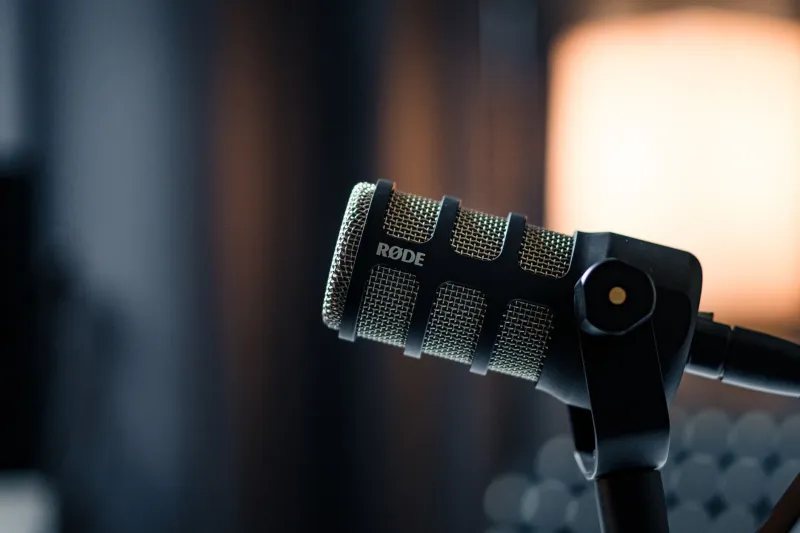
There's a moment every baseball fan knows — you're settled in, game on, and the broadcaster's voice becomes the connective tissue between what's happening on the field and what you feel in your chest. That voice shapes the story. It decides what matters, what gets celebrated, and whose experience gets centered. For most of baseball's media history, that voice belonged to the same narrow demographic. Slowly, unmistakably, that's starting to change.
LGBTQ+ broadcasters, analysts, and journalists are carving out real space in baseball media — not as novelties or diversity checkboxes, but as skilled storytellers who happen to see the game through a lens the industry hasn't always made room for. And the stories they're telling? They hit different.
The Booth Was Never Neutral
Let's be honest about something: sports broadcasting has never been a value-neutral exercise. The voices that dominated for generations didn't just describe the game — they defined its culture. They decided which storylines were worth pursuing, which players got humanized, and which topics were considered too "political" to touch. LGBTQ+ identity, race, mental health, the intersection of athletics and personal struggle — these weren't exactly staples of the traditional broadcast script.
When your entire media apparatus is built around a single perspective, blind spots aren't just possible — they're inevitable. LGBTQ+ broadcasters aren't just filling seats in the booth. They're identifying and filling those gaps in ways that make the coverage richer for every fan watching.
Take the way identity-forward broadcasters approach player stories. Rather than defaulting to stats and contract figures, many LGBTQ+ media voices bring a more holistic curiosity — asking what a player's journey actually looked like, what barriers existed, and what it cost them to get here. That instinct for the fuller picture comes, in part, from knowing firsthand what it's like to navigate a world that wasn't built with you in mind.
Visibility in the Media Matters As Much As on the Field
We talk a lot — rightfully — about LGBTQ+ representation among players. But representation in the media booth carries its own weight. When a young queer kid flips on a game and hears someone calling the action who is openly gay, trans, or bisexual, something shifts. Not just in terms of inspiration, though that matters enormously. It shifts what feels possible.
Sports media shapes culture. It tells us who the heroes are, what kind of excellence deserves airtime, and whose voice is considered authoritative on the subject. LGBTQ+ broadcasters operating openly in that space send a signal that's hard to overstate: you don't have to shrink yourself to belong here.
Several openly LGBTQ+ sports journalists and media personalities have built real platforms in recent years — writing for major outlets, appearing on national broadcasts, hosting podcasts with significant audiences. Each one makes the next a little easier. The pipeline is still thin, but it exists in a way it genuinely didn't a decade ago.
Challenging the "Just Stick to Sports" Reflex
One of the most significant ways LGBTQ+ media voices are reshaping baseball coverage is by pushing back — sometimes explicitly, sometimes just through their work — against the tired "stick to sports" mentality. That phrase has always functioned as a gatekeeping tool, a way of telling certain storytellers to stay in their lane and keep the sport's cultural dimensions safely out of frame.
But baseball is culture. It always has been. The sport's history is inseparable from questions of race, gender, class, and yes, sexuality. Jackie Robinson's story isn't just a baseball story. Neither is the story of the first openly gay player who steps into the majors. Neither is the story of a broadcaster who came out publicly while working for a regional sports network and had to fight to keep their job.
LGBTQ+ broadcasters and journalists are often better equipped — or at least more motivated — to engage with those dimensions honestly, because those dimensions are part of their own lived reality. That's not bias. That's depth.
The Business Case Is Real, But It's Not the Point
Sure, there's a demographic argument to be made. LGBTQ+ fans represent a meaningful portion of baseball's audience. Younger fans broadly are more diverse, more socially conscious, and more likely to tune out coverage that feels exclusionary or tone-deaf. Hiring LGBTQ+ media talent makes business sense.
But framing it purely as a business calculation misses the actual stakes. This is about what kind of institution baseball wants to be. The sport has spent the last several years making visible commitments to inclusion — Pride nights, community partnerships, updated policies. The media layer needs to reflect that same intent. You can't claim to be building a more inclusive game while your broadcast booths and press boxes look exactly like they did in 1987.
The good news is that some outlets are getting it. Regional sports networks have become incubators for diverse media talent in ways that national broadcasts have been slower to embrace. Podcasting and digital media have given LGBTQ+ baseball voices platforms that didn't require permission from gatekeepers. The landscape is genuinely shifting.
What Comes Next
Progress in media representation tends to be nonlinear — two steps forward, one frustrating step back. But the trajectory in baseball media feels real in a way it hasn't always. More LGBTQ+ voices are working in the industry. More of them are out publicly. More of them are covering the stories that matter to communities the sport has historically underserved.
What's needed now is institutional commitment — not just tolerance of LGBTQ+ media talent, but active investment in developing that pipeline. Mentorship programs, internships at regional networks, support from established voices who can open doors. The talent is there. It's always been there.
For fans, the ask is simpler: seek out those voices. Subscribe to the newsletter, follow the podcast, tune into the broadcast of the analyst who's telling baseball stories you haven't heard before. Audience support is infrastructure. It tells the industry what to build more of.
The game sounds different when more people get to call it. Richer, more honest, more complete. That's not a threat to baseball's traditions — it's an upgrade to what those traditions can mean.
The booth is big enough. It always was.