Your Pride Night Playbook: The Fan's Guide to Finding the Real Deal at MLB Stadiums This Season
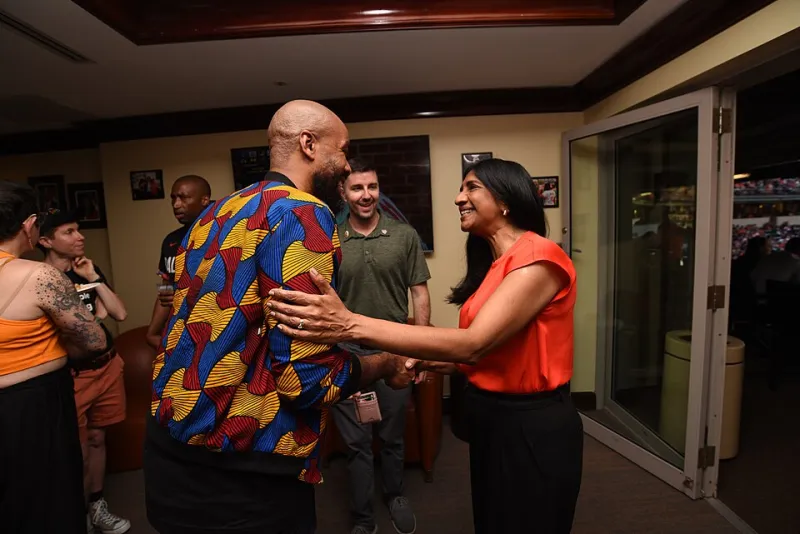
Photo: Maryland GovPics, CC BY 2.0, via Wikimedia Commons
There's something genuinely electric about walking into a major league ballpark on Pride Night. The flags, the colors, the sense that this space — often coded as straight, often coded as masculine — is, for one evening at least, explicitly yours. It's a feeling that's hard to describe to someone who hasn't experienced it, and one that a lot of LGBTQ+ fans have been chasing with increasing enthusiasm over the past decade.
But here's the thing: not every Pride Night is built the same. Some are transformative community events that reflect a genuine organizational commitment to inclusion. Others are, let's be real, a rainbow-colored bobblehead and a half-hearted PA announcement between innings. Knowing the difference matters — both for your experience and for where you spend your dollars.
Consider this your field guide.
Why Pride Nights at Ballparks Hit Different
First, let's give credit where it's due. The fact that every MLB team now hosts at least one Pride Night per season is not nothing. Fifteen years ago, that wasn't the case. The visibility of LGBTQ+ fans in baseball spaces has increased dramatically, and Pride events — however imperfect — have been part of that shift.
For many queer fans, attending a Pride Night is a profoundly different experience than a regular game. You're surrounded by community. You see yourself reflected in the crowd. You're not doing the quiet mental math of whether to hold your partner's hand or whether the guy two rows over is going to say something. There's a lowered guard that makes the whole experience feel more joyful, more free.
Fan testimonials collected by advocacy groups consistently highlight this sense of belonging as the primary draw. "It was the first time I felt like I could just... be a baseball fan," said one attendee at a recent Pride Night in the Midwest. "Not a gay baseball fan. Just a fan."
That matters. Full stop.
The Spectrum: Teams That Go Deep vs. Teams That Go Through the Motions
Here's where we get honest. The MLB landscape on LGBTQ+ inclusion is genuinely uneven, and fans deserve to know what they're walking into.
Teams setting the standard tend to share a few characteristics: they partner with established local LGBTQ+ organizations year-round (not just in June), they've implemented concrete non-discrimination policies, they offer player and staff inclusion training, and their Pride Night programming reflects genuine community input rather than a marketing team's idea of what queer fans want.
The San Francisco Giants have long been considered a benchmark here, which makes geographic sense given the team's home in one of America's most historically significant LGBTQ+ cities. But teams in less obviously progressive markets — the Tampa Bay Rays, the Chicago Cubs, the Seattle Mariners — have also developed reputations for events that feel substantive rather than performative.
The checkbox teams are trickier to call out by name without getting into legal territory, but the signs are recognizable: Pride Night programming that consists primarily of themed merchandise, no visible LGBTQ+ community partnerships listed on the team's website, and a noticeable silence from the organization when LGBTQ+ issues come up in the broader news cycle. If a team is posting rainbow logos in June and going quiet the rest of the year, that's information.
A good rule of thumb: look up whether the team has signed onto the You Can Play Project's pledge, whether they've made public statements in support of LGBTQ+ rights during legislative battles in their state, and whether local LGBTQ+ organizations are genuinely involved in planning the event or just listed as sponsors.
First-Timer Tips: Making the Most of Your Pride Night
If you're heading to your first Pride Night at a ballpark, here's what the veterans want you to know:
Get there early. The pre-game atmosphere at Pride Nights is often as good as the game itself. Many teams host community tables, local LGBTQ+ org booths, and social spaces before first pitch. This is where you'll find your people.
Check the ticket packages. Many teams offer Pride-specific ticket bundles that include a donation to an LGBTQ+ nonprofit. Buying through these packages — rather than the secondary market — ensures your money is doing double duty.
Find your section. Large LGBTQ+ fan groups and local chapters of organizations like PFLAG often block-buy tickets together for Pride Nights. A quick search on social media or local event listings can connect you with a ready-made crew if you're going solo.
Bring something to wave. Flags, signs, rainbow gear — Pride Nights are one of the few places in a stadium where expressing your identity visually is not just accepted but celebrated. Lean into it.
Stay for the full game. Some of the best Pride Night moments — player acknowledgments, post-game celebrations, community recognitions — happen late in the evening. Don't duck out after the sixth.
Beyond the Night: Pushing for Year-Round Commitment
The most important question any LGBTQ+ fan can ask about their team isn't "Are they hosting a Pride Night?" It's "What are they doing the other 161 games?"
Real inclusion looks like LGBTQ+ employees in visible roles within the organization. It looks like players who feel safe enough to be out. It looks like broadcasting partners who don't use homophobic language and face real consequences when they do. It looks like front offices that don't stay silent when anti-LGBTQ+ legislation threatens fans in their market.
As fans, we have leverage. Ticket sales, merchandise purchases, and social media engagement are all signals that teams pay attention to. Showing up to Pride Night in force is one way to use that leverage. Asking harder questions of your team's front office — on social media, in fan surveys, in letters to the organization — is another.
The Bottom Line
Pride Night at the ballpark is worth going to. Full stop. The energy is real, the community is real, and the visibility matters. But the fans who've been doing this the longest will tell you: the real victory isn't one great night in June. It's a sport that doesn't need a special occasion to make LGBTQ+ fans feel welcome.
We're not there yet. But the stadiums are getting fuller, the flags are getting louder, and the teams that are paying attention are starting to understand that inclusion isn't a risk. It's a draw.
See you out in center field.