Breaking Point: What Happens When the Game Demands Everything and Gives LGBTQ+ Players Nothing Back
There's a particular kind of loneliness that doesn't show up on any injury report. No MRI catches it. No trainer tapes it up before a doubleheader. It lives somewhere between the locker room and the drive home, in the silence after a teammate makes a joke you have to pretend to laugh at, in the calculation you run every single day about how much of yourself is safe to show.
For LGBTQ+ athletes in professional baseball, that loneliness isn't a side effect of the job. For many, it is the job.
The Weight Nobody Talks About
Baseball has a complicated relationship with mental health on its best day. The sport's culture — built on stoicism, grit, and a kind of mythologized toughness — has historically treated psychological struggle as weakness. Guys shake things off. They stay in their lane. They don't talk about what's going on inside.
Now layer on top of that the experience of being queer in a locker room that may not be ready for you. Suddenly you're not just managing performance anxiety or slumps or the pressure of a contract year. You're managing an entire hidden identity, calculating risk with every conversation, every team dinner, every road trip.
"The cognitive load alone is staggering," says Dr. Priya Nambiar, a sports psychologist who works with professional athletes across multiple leagues. "When you're expending that much mental energy on concealment or hypervigilance, there's simply less left over for the actual work of competing. And then players blame themselves for underperforming, which compounds the anxiety. It becomes a cycle that's really hard to break from the inside."
That cycle has a name in clinical literature: minority stress. It describes the chronic psychological strain that comes not from any single incident, but from sustained exposure to stigma, discrimination, and the ongoing threat of rejection. For LGBTQ+ athletes, minority stress doesn't clock out when they take off their cleats.
When the Clubhouse Isn't Safe
Marco — not his real name — played four seasons in the minors before stepping away from the game at 26. He describes his experience with a kind of weary precision, like someone who has thought about it a lot and still hasn't made full peace with it.
"I loved baseball my whole life. Like, deeply loved it," he says. "But I spent three of those four years convinced that if anyone found out I was gay, my career was over. That's not a small thing to carry. That's everything."
He never sought help through any team-affiliated resource. The idea felt absurd to him. "Who was I going to tell? The team psychologist who also talks to the manager? I didn't trust the system to protect me. So I just... didn't use it."
His story isn't unusual. Multiple LGBTQ+ athletes and advocates interviewed for this piece described the same core problem: the mental health resources that do exist inside professional baseball are structurally compromised by the very culture they're embedded in. When a team's sports psychologist is also responsible for reporting back on player fitness and readiness, confidentiality becomes murky. Trust evaporates. Players — especially those with something they feel they need to hide — stay silent.
The Access Gap
MLB has made real strides on paper. Most major league clubs now have full-time mental health staff, and the league's joint program with the Players Association expanded mental health benefits significantly in recent years. On the surface, the infrastructure looks better than it ever has.
But access isn't the same as safety. And safety isn't the same as actually using the resources available to you.
"Having a hotline number in the team handbook doesn't mean a closeted player is going to call it," says Jesse Cortland, a former minor leaguer who came out publicly after retiring and now advocates for LGBTQ+ inclusion in youth sports. "You have to create an environment where people believe they won't be punished for being human. That's a cultural problem, not a logistical one."
The minor leagues present an even starker picture. Without the salary floors or union protections that major leaguers enjoy, players in the minors are more economically vulnerable and therefore more reluctant to do anything that might jeopardize their roster spot. Seeking mental health support — especially around anything identity-related — can feel like a career gamble when you're one bad week away from a release.
What Change Actually Looks Like
Some teams are quietly doing the work. A handful of organizations have begun bringing in outside therapists with no reporting obligations to the club — practitioners who work solely for the athlete, not the front office. Others have started partnering with LGBTQ+-affirming mental health organizations to expand their referral networks beyond the standard team staff.
Dr. Nambiar points to a few concrete shifts she's seen make a difference. "When team leadership — coaches, veterans, front office — openly model that they value mental health, it changes the permission structure for everyone else. Players take cues from the top. If the manager talks about going to therapy like it's just part of his routine, that matters."
The Players Association has also been pushing for more robust, confidential mental health benefits that players can access entirely outside the team structure. The idea is simple: give athletes a lane that doesn't run through the organization that controls their livelihood.
For LGBTQ+ players specifically, advocates want to see teams go further — creating explicit non-discrimination policies that include sexual orientation and gender identity, training coaching staffs on LGBTQ+ inclusion, and actively recruiting mental health practitioners with demonstrated experience working with queer athletes.
The Ones Who Found Their Way Through
Not every story ends in burnout or quiet exits. Some LGBTQ+ athletes have found genuine support — often through outside channels, personal networks, or the rare teammate or coach who created enough safety to allow for honesty.
Cortland credits a sports psychologist he found on his own, completely separate from the team, with helping him survive his final two seasons. "She got it. She understood what I was dealing with in a way that nobody inside the organization could have. That relationship kept me in the game long enough to actually enjoy parts of it again."
That's the version of baseball worth fighting for — one where no player has to choose between their mental health and their career, where being queer doesn't automatically mean carrying an invisible injury into every at-bat.
The sport is already late to this conversation. But late is still better than never, and the players who've been waiting deserve more than just the promise of progress.
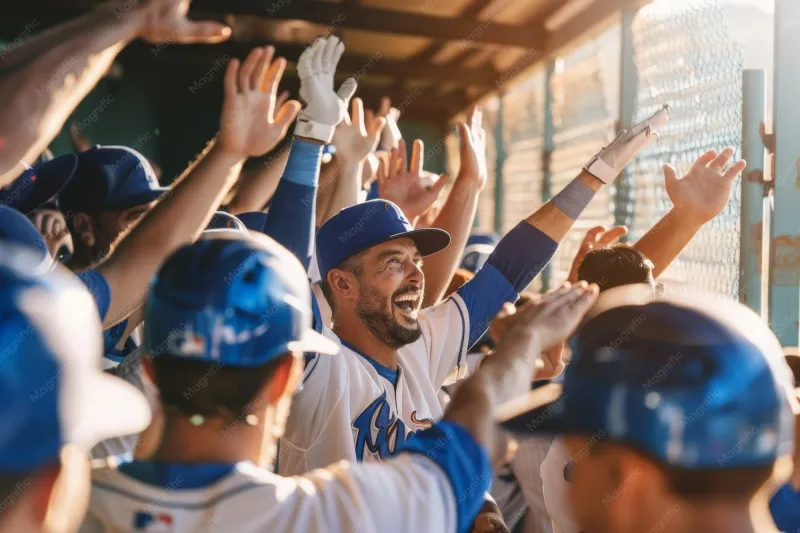
They deserve a dugout that actually has their back.