Rethinking the Rulebook: LGBTQ+ Athletes Are Calling Out Baseball's Most Exclusionary Traditions
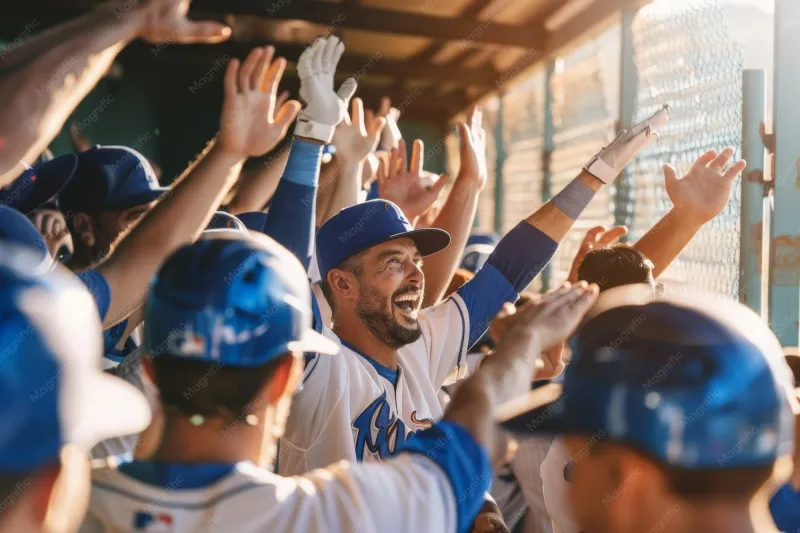
Photo: baseball dugout diverse players team celebration, via img.freepik.com
Baseball loves its traditions. The smell of a freshly chalked baseline, the seventh-inning stretch, the handshake line after a playoff series — there's real beauty in the rituals that have been passed down through generations of the sport. Nobody's here to burn the whole thing down.
But let's be honest: a lot of baseball's so-called "unwritten rules" weren't written for everyone. They were written by a very specific kind of guy, for a very specific kind of guy, and if you didn't fit that mold, you either figured out how to perform it convincingly or you quietly disappeared from the game.
LGBTQ+ athletes and coaches are increasingly refusing to do either. And in doing so, they're forcing a long-overdue conversation about which traditions actually make baseball better — and which ones were just gatekeeping dressed up in nostalgia.
The Masculinity Performance Tax
One of the most persistent unwritten rules in baseball is the one nobody ever writes down: you perform toughness, and you do it in a very particular, very narrow way. You don't show too much emotion on the field. You don't hug too long in the dugout. You don't talk about struggle unless it's framed as something you powered through alone.
For LGBTQ+ players, that performance carries a specific cost. It's not just emotional suppression in general — it's suppression that often doubles as active concealment. The locker room banter that's supposed to be "just joking." The post-win celebrations that have a whole unspoken choreography of acceptable contact. The way vulnerability is okay if it's about your ERA but not about, say, your identity.
"There's this tax you pay," one minor league pitcher described in a conversation earlier this season. "Every interaction has this extra layer where you're calculating how much of yourself is safe to show. It's exhausting on top of an already exhausting job."
The players pushing back on this aren't asking for baseball to become a feelings circle. They're asking for the emotional bandwidth that straight players have always taken for granted — the freedom to just exist in the clubhouse without running a constant internal audit.
Who Gets Invited to the After-Party
Post-game bonding is a cornerstone of baseball culture. The team dinner. The road-trip card game. The unofficial gathering at a bar two blocks from the stadium that everyone somehow knows about. These rituals build chemistry, and chemistry wins games. Nobody disputes that.
What gets disputed less often is who those gatherings are actually designed for — and how their unspoken social codes can quietly exclude players who don't fit the assumed default.
LGBTQ+ athletes have described the particular alienation of being on a team but not quite of it. Not because anyone explicitly said "you're not welcome" but because the whole social architecture assumed a specific kind of person. The jokes that land for everyone else. The conversation topics that circle back to the same comfortable territory. The way certain players get pulled into the inner circle and others don't, and how that sorting process isn't always as random as it looks.
Coaches who identify as LGBTQ+ have started addressing this more directly — rethinking how they structure team bonding so it doesn't default to one cultural template. That might mean varying the activities, being more intentional about who ends up in which social clusters, or simply making it clear that the team culture is something everyone builds together rather than something newcomers inherit and adapt to.
"The tradition worth keeping is the closeness," said one youth baseball coach who came out to her players two years ago. "The specific way that closeness gets performed? That's just habit. And habits can change."
The Celebration Policing Problem
Few things reveal the unwritten rulebook faster than how a team reacts when someone celebrates differently. Baseball has a famously complicated relationship with visible joy — the bat flip debates alone could fill an entire dissertation. But the policing of celebration has a specific dimension for LGBTQ+ players that doesn't get talked about enough.
When a player is openly queer, or even just perceived as gender-nonconforming in any way, their celebrations get read through a different lens. Exuberance gets coded as "too much." Physical expressiveness gets flagged. The same home run trot that reads as confident on one player reads as something else entirely on another, and the difference often has everything to do with how well that player fits the sport's dominant masculine template.
The players challenging this aren't just asking to bat flip in peace. They're pointing out that the entire framework for what counts as "showing up the other team" versus "playing with passion" is built on assumptions that were never neutral to begin with.
Some of the most interesting pushback is coming from straight allies in clubhouses who've started calling out the double standard explicitly — noting when a teammate's celebration gets policed in ways that others' don't, and naming the inconsistency out loud. That kind of visible allyship, small as it sounds, shifts the culture in ways that policy documents can't.
What's Worth Keeping
Here's the thing that gets lost sometimes in these conversations: LGBTQ+ players largely love baseball. They're not trying to dismantle the sport — they're trying to stay in it. The traditions they're questioning are the ones that were designed to push them out, not the ones that make the game what it is.
The competitive fire, the team chemistry, the respect for the craft, the weight of history — all of that can stay. More than stay: it can get stronger when the people carrying it forward aren't doing so while simultaneously hiding parts of themselves.
"I want my players to understand the game the way I understand it," said one former collegiate player who now coaches at the high school level. "The history, the strategy, the work ethic. What I don't want to pass down is the part where certain kids have to make themselves smaller to belong. That was never the good part."
Baseball is, at its core, a sport about showing up, day after day, and doing the work. There's nothing in that ethos that requires anyone to be someone they're not. The unwritten rules that demanded otherwise were always the weakest part of the rulebook — and the players who are crossing them out aren't breaking with tradition.
They're finally writing one worth keeping.