Rookie Rites or Red Flags: How LGBTQ+ Ballplayers Are Killing Hazing Culture One Clubhouse at a Time
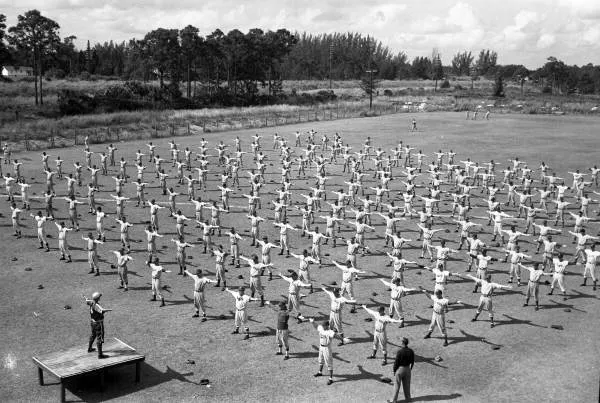
Photo: State Library and Archives of Florida, Public domain, via Wikimedia Commons
There's a version of baseball's clubhouse story that gets told over and over — the gruff veteran, the wide-eyed rookie, the initiation that supposedly builds character. Dress up in a costume. Carry the veterans' bags. Endure whatever gets thrown at you and earn your stripes. It's framed as harmless. As tradition. As just how it works.
But for a lot of players — particularly those who are LGBTQ+ — that version of team bonding has always felt less like a rite of passage and more like a test they were never going to pass.
Now, quietly and with real conviction, a new generation of players is rewriting what it means to build a team.
The Hidden Cost of "Just Part of the Game"
Hazing in professional baseball isn't new, and it isn't subtle. Rookies forced into women's clothing as a "joke." Sexualized taunts passed off as affection. Homophobic slurs lobbed around the clubhouse like they're nothing. For most of baseball's history, the unspoken rule was simple: take it, or be labeled soft.
For LGBTQ+ players, the calculus was even more brutal. Every "harmless" jab carried an extra charge. Every cross-dressing stunt landed differently when you were already hiding part of yourself. Every laugh at someone's expense felt like a warning shot.
"You're constantly doing this mental math," says one former minor leaguer who came out after retiring. "Like, do I laugh along? Do I push back? Either way, you're performing. You're managing how you're perceived every single second. That's exhausting — and it has nothing to do with baseball."
The research backs this up. Studies on team cohesion consistently show that environments built on fear, humiliation, or exclusion don't actually produce tighter bonds — they produce compliance. Players fall in line not because they trust each other, but because the cost of standing out is too high. That's not chemistry. That's survival.
The Players Pushing Back
What's changed in recent years isn't just the cultural conversation around hazing — it's the willingness of players to name the problem out loud, in real time, rather than waiting until they're safely out of the game.
Several current and former players, speaking to Out in Center Field, described moments where they actively intervened when clubhouse dynamics started heading somewhere ugly. One Double-A outfielder recounted a team dinner where a veteran started assigning rookies humiliating "tasks" to perform before they could eat. He didn't yell. He didn't make it a whole thing. He just said, flatly, "We're not doing that," and started passing the bread.
"Sometimes it's that simple," he said. "Someone just has to be the first person who doesn't play along. And then suddenly the whole thing deflates."
Others described more deliberate efforts — talking to managers and coaches before spring training even started, establishing norms early about what was and wasn't acceptable in their space. One pitcher who is openly gay said he made a point of having direct conversations with teammates during his first week on a new team, not about his identity, but about what he expected from a clubhouse.
"I wasn't asking for anything special," he said. "I just told them: I'm here to win baseball games, I'm going to work my ass off, and I expect to be treated like a professional. That's it. Most guys were like, yeah, obviously. The ones who weren't — that told me something useful, actually."
Building Something Better
The more interesting story isn't just what's being dismantled — it's what's being built in its place.
Across levels of the game, a growing number of teams are experimenting with team-building practices that don't rely on humiliation as a bonding mechanism. Some of it is organizationally driven: MLB's ongoing cultural competency initiatives have pushed front offices to think more seriously about clubhouse environment. But a lot of it is player-led, organic, and genuinely creative.
Group cooking nights where veterans and rookies cook together. Trivia tournaments organized by players who actually enjoy that kind of thing. Charity drives where the whole roster participates. Pickup basketball. Fantasy football leagues that somehow become the glue holding a pitching staff together.
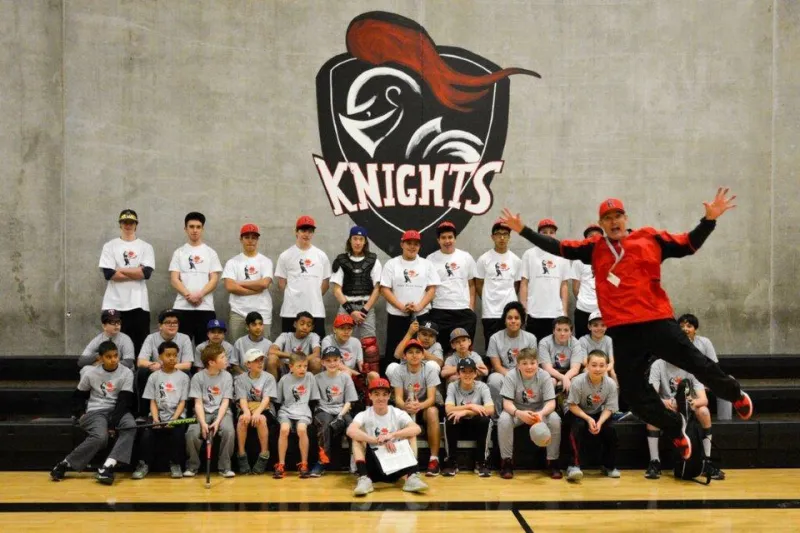
"People think you need some kind of power dynamic to create camaraderie," says one openly queer coach who works with a youth travel program in the Pacific Northwest. "But what actually bonds people is shared experience and genuine investment in each other. You don't need to embarrass anyone to get there."
This reframing matters enormously for LGBTQ+ players, who have historically been excluded from the informal social structures that define clubhouse life. When team bonding looks like poker nights with heavy drinking and locker room bravado, it's easy to stay on the margins. When it looks like a team barbecue or a group hike or a movie night, suddenly everyone actually shows up.
What Real Team Chemistry Looks Like
Here's the thing that often gets lost in conversations about inclusion: this isn't just about making LGBTQ+ players more comfortable, though that matters enormously. It's about making entire teams better.
Research on high-performing teams — in sports, in workplaces, in any collaborative environment — consistently points to psychological safety as a key ingredient. When people feel genuinely accepted, they take risks, communicate honestly, and perform at higher levels. When they're managing a performance for survival, they hold back.
A shortstop who spent several years in affiliated ball before transitioning out of the sport put it bluntly: "I was a different player in environments where I felt like myself. My instincts were sharper. My communication with teammates was better. I wasn't spending mental energy on anything except the game."
That's the argument that's slowly gaining traction even among coaches and managers who might not frame themselves as particularly progressive. You want your guys focused on baseball? Create a clubhouse where they can actually breathe.
The Unwritten Rules Are Getting Rewritten
Baseball has always been a sport steeped in unwritten rules — some of them useful, some of them absurd, and some of them genuinely harmful. The hazing traditions that LGBTQ+ players are pushing back against fall squarely into that last category.
But here's what's worth celebrating: the players doing this work aren't waiting for permission. They're not lobbying commissioners or writing op-eds (well, some of them are, and good for them). Mostly, they're just showing up and refusing to participate in rituals that never made anyone better.
That's a quiet kind of courage. And in a sport that claims to love its traditions, it's also a genuinely radical act.
The clubhouse of the future doesn't look like the one from the highlight reel of some 1990s locker room documentary. It looks like a group of people who actually want to be there — together, as themselves, ready to play ball.
That's the team worth rooting for.