Coaching From the Dugout Out: How LGBTQ+ Youth Coaches Are Cracking Baseball's Grassroots Ceiling
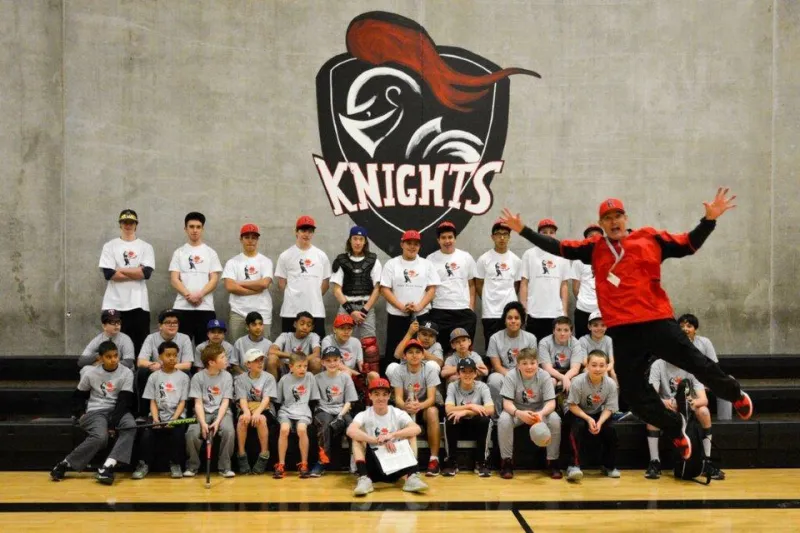
Photo: Bbeatty34, CC BY-SA 4.0, via Wikimedia Commons
There's a version of this story that's easy to tell. Brave coach shows up, kids love them, everybody learns something, credits roll. The reality — as anyone who's spent time around Little League parking lots or travel ball tournaments in middle America knows — is a little messier, a lot more human, and honestly? Way more interesting.
LGBTQ+ coaches at the youth and amateur levels of baseball are quietly doing some of the most consequential inclusion work in the sport. Not on a major league stage. Not in front of a camera crew. In rec-league dugouts in Ohio. On practice fields in suburban Georgia. At 6 a.m. batting cage sessions in communities where "out" still carries real social risk.
And the stakes aren't abstract. The coaches who show up at this level are shaping how an entire generation of players understands who baseball is for.
The Pipeline Nobody Talks About
When people discuss the lack of LGBTQ+ representation in professional baseball, the conversation almost always starts at the top — the majors, the front offices, the broadcast booths. That's understandable. Visibility at the highest levels matters. But it skips a foundational question: where do out LGBTQ+ role models enter a young player's baseball life in the first place?
For most kids, the answer is supposed to be youth coaches. The adults who run practice, call the lineup, pull a kid aside after a rough inning and tell them they've still got it. These are the people who shape a player's relationship with the sport before the sport has a chance to shape them otherwise.
Right now, that pipeline is thin. Depending on the region, it's close to nonexistent.
The reasons are layered. Some LGBTQ+ adults who'd make incredible coaches simply don't pursue it — the culture of youth sports organizations can feel unwelcoming before you even submit a volunteer application. Others step into coaching roles and choose not to be out, a completely valid personal decision that nonetheless means young LGBTQ+ players aren't getting the visible representation that changes how they see their own future in the sport.
And then there are the coaches who are out, fully and publicly, and navigating the very specific friction that comes with that choice.
What Friction Actually Looks Like
It rarely announces itself as outright hostility — though that happens too. More often, it's subtler. It's the parent who pulls their kid from a team mid-season without explanation. The league administrator who finds procedural reasons to complicate a coaching application. The other coaches in the dugout who are perfectly cordial and somehow never quite include you in the post-game debrief.
For coaches in more progressive metro areas, this friction might be minimal. For coaches in smaller markets, rural communities, or regions where youth sports organizations are tightly interwoven with religious institutions, the social math gets complicated fast.
What's striking, though, is how many out coaches describe pushing through it anyway — not out of some abstract commitment to representation, but because they remember being a kid who needed someone like them in the dugout and didn't have one.
That's not a talking point. That's a reason.
The Belonging Effect
Here's what the research — and frankly, anyone paying attention — already knows: young people who see themselves reflected in positions of authority perform better, stay engaged longer, and develop stronger relationships with the institutions those authority figures represent.
In baseball terms, that means a queer kid on a youth team with an out LGBTQ+ coach isn't just more likely to feel safe. They're more likely to still be playing baseball at sixteen. More likely to pursue the sport seriously. More likely to become a coach themselves someday.
The ripple effect is real, and it's long. One out coach in one rec league in one mid-sized American city is doing work that the sport will feel a decade from now, whether or not anyone tracks it back to that source.
Coaches who've been at this for a few years will tell you about the moments that make it concrete — the kid who lingers after practice, the parent who quietly says thank you in the parking lot, the teenager who comes out to their coach before they come out to anyone else because the coach already made it clear that the dugout is a safe place to be exactly who you are.
Those moments don't make the sports page. They make a life.
Where Youth Baseball Organizations Stand
This is where the story gets complicated in a different direction.
Some youth baseball organizations — certain regional Little League affiliates, progressive travel ball programs, a handful of forward-thinking high school athletic departments — have made genuine structural moves toward inclusive coaching environments. Clear non-discrimination policies. Explicit language in coaching guidelines. Training that addresses bias and creates accountability.
Others are operating on vibes and hoping nothing uncomfortable happens.
Little League International, to its credit, has anti-discrimination language in its policies and has taken public positions in support of inclusion. But policy language and lived experience don't always match, and enforcement at the local district and league level is inconsistent enough that an out coach's experience can vary wildly depending on zip code.
Travel ball — which has become an enormous and largely unregulated corner of youth baseball — is its own universe. Without the organizational structure of Little League or high school athletics, individual travel programs operate with almost total autonomy over culture and hiring. That means some of the most inclusive youth baseball environments in the country are travel programs with explicitly affirming leadership. It also means some of the least inclusive ones have zero external accountability.
What's largely missing, across the board, is proactive infrastructure — not just policies that say discrimination is prohibited, but active recruitment of LGBTQ+ coaches, mentorship pipelines that connect aspiring out coaches with established ones, and organizational cultures that signal welcome before someone has to ask.
Building What Wasn't There
Some coaches aren't waiting for the infrastructure to arrive. They're building it.
Across the country, informal networks of LGBTQ+ youth coaches have started to emerge — connecting through social media, through Pride Night events at ballparks, through word of mouth in LGBTQ+ athletic communities. The goal isn't just mutual support, though that matters. It's knowledge-sharing: which leagues have genuinely inclusive cultures, which organizations have real teeth behind their policies, how to handle specific situations when they arise, and how to mentor the next wave of out coaches who are figuring out whether this is a space for them.
There's something deeply baseball about that, actually. The sport has always transmitted itself through informal networks — older players teaching younger ones, coaches passing down philosophies, the game moving through generations via relationships as much as through any official structure.
LGBTQ+ coaches building their own version of that network aren't working outside baseball's culture. They're working squarely inside it, using the tools the sport has always used, in service of making it bigger.
The Long View
The pipeline problem in LGBTQ+ baseball representation doesn't get solved at the major league level. It gets solved on a Tuesday evening practice field in a suburb somewhere, when a kid looks up and sees a coach who's out and proud and completely in command of the situation, and files that image away in the part of their brain that decides what's possible.
The coaches doing that work right now are playing a long game. Most of them know it. Most of them are fine with it.
Baseball, after all, is a sport built on patience — on trusting that the work you put in today shows up in the box score eventually, even if you can't see the connection yet.
Out LGBTQ+ coaches in youth baseball are playing that game. The sport would do well to start playing it with them.