From Grandstand to Home Plate: How LGBTQ+ Families Are Building Baseball Legacies Across Generations
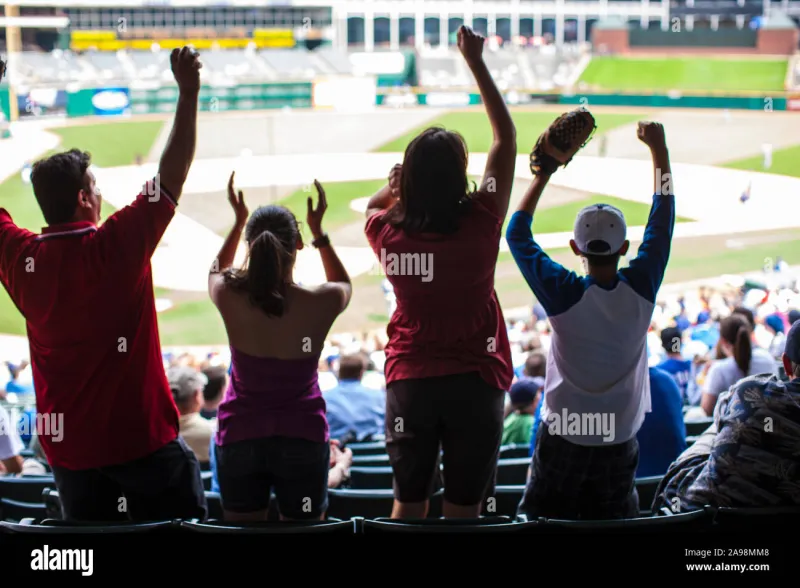
Photo: multigenerational family cheering together at baseball game stadium, via c8.alamy.com
There's a particular kind of magic in watching your grandmother explain the infield fly rule to your seven-year-old. Add in the fact that grandma came out at 67, and that her granddaughter already knows the word "bisexual" the same way she knows "double play" — and you start to understand what a genuinely new kind of baseball family looks like.
Across the country, LGBTQ+ families spanning two, three, and sometimes four generations are doing something quietly revolutionary: they're taking one of America's most tradition-soaked sports and rebuilding its rituals from the inside out. Not by rejecting what came before, but by refusing to leave themselves out of the story.
The Weight of What Wasn't Said
For a lot of older LGBTQ+ sports fans, the relationship with baseball is complicated. The game was always there — the summer soundtrack, the family bonding ritual, the thing that connected you to a parent or grandparent who maybe didn't know how to say "I love you" any other way. But for gay, lesbian, bisexual, and trans fans who grew up in the mid-20th century, the ballpark also meant performing straightness. It meant laughing at the wrong jokes in the bleachers. It meant keeping a part of yourself locked in the car while you walked through the turnstile.
Robert Vásquez, a 71-year-old lifelong Cubs fan from Chicago's Pilsen neighborhood, knows that feeling intimately. "Baseball was my dad's language," he says. "It was the one place we connected. But I spent 40 years watching games next to people I loved while hiding who I was. That's exhausting in a way that's hard to describe."
Robert came out to his family at 58, after his wife passed away. His son, Marco, didn't skip a beat. His grandkids — now 12 and 15 — grew up knowing Grandpa Robert has a boyfriend named Dennis who also happens to have strong opinions about the designated hitter rule.
"The kids don't think it's a big deal," Robert says, laughing. "Which is exactly the point. It shouldn't be."
Rewriting the Rituals
What strikes you when you talk to families like the Vásquezes is how intentional they are about tradition — not erasing the old ones, but layering new meaning onto them.
Marco's daughter, Sofia, has her great-grandfather's scorecard from a 1987 game framed in her bedroom. She also has a photo of herself at her first Pride Night at Wrigley, standing between her dad and Grandpa Robert, all three of them in rainbow Cubs gear. "I want her to know both of those things are her inheritance," Marco says.
That kind of deliberate legacy-building shows up differently in every family, but the throughline is the same: making sure younger generations never have to choose between the sport they love and the people they are.
In Atlanta, Diane and Carol Hutchinson-Park have been together for 31 years and have been Braves season ticket holders for nearly as long. Their adult daughter, Priya — who they adopted from South Korea as an infant — recently came out as non-binary. The response from her moms? They ordered a custom jersey with Priya's chosen name before the next homestand.
"We cried a little," Diane admits. "But mostly because we were happy. We'd spent years making sure Priya knew that our family section at Truist Park was a safe place. To see them walk in there as their full self? That's what we built all those traditions for."
Mentorship That Happens Between Innings
One of the most underappreciated aspects of multigenerational LGBTQ+ sports families is the kind of mentorship that happens organically — not in a formal sit-down conversation, but in the spaces between pitches.
Teenagers who are figuring out their identity often can't have the conversations they need at school or even with their parents. But a long drive to a road game, or the quiet rhythm of a slow mid-August afternoon at the ballpark? That's where things get said.
"My Uncle Pete came out when I was 13," says Jordan Castellano, now 24 and a die-hard Mets fan living in Queens. "He didn't make it a big thing. He just started bringing his partner, Luis, to games. And I remember sitting there thinking — oh. You can just do that. You can just show up and be yourself and still love this game."
Jordan came out as gay at 16. Uncle Pete was the first person he told. They celebrated with a trip to Citi Field.
This kind of quiet mentorship — what you might call leading by showing up — is something LGBTQ+ elders in these families often don't fully realize they're doing. But its impact is enormous. When a young person sees someone older and out living joyfully inside a space they love, it recalibrates what's possible.
Breaking the Silence Doesn't Mean Breaking the Tradition
There's a misconception, sometimes, that embracing LGBTQ+ identity within a family sports tradition means disrupting something sacred. In practice, the families we spoke with described the opposite experience — coming out, or welcoming out family members, made the traditions feel more real, not less.
"My dad used to say baseball was about honesty," says Renee Okwu, a 45-year-old lesbian and lifelong Cardinals fan whose father was a semi-pro player in the 1970s. "You can't fake it on the field. The stats don't lie." Renee pauses. "I think about that a lot. Because hiding who you are — that's the opposite of what he was teaching me."
Renee's teenage daughter is already talking about wanting to play college softball. At Cardinals games, three generations of Okwu women sit in the same section they've occupied for 20 years. The seats are the same. The people in them are finally fully themselves.
What Gets Passed Down
At its core, a sports tradition is a love language. It's a way of saying: this matters to me, and so do you, so let's do this together. When LGBTQ+ family members are welcomed fully into that ritual — or when they're the ones creating it — something shifts. The tradition stops being about performance and starts being about genuine connection.
For Robert Vásquez, that shift happened on a Tuesday night last July. The Cubs were losing badly. Dennis had fallen asleep in the third inning. His grandkids were arguing about whether to get a second round of hot dogs. And Robert sat there, in the middle of all of it, thinking about all the games he'd attended with a piece of himself missing.
"I looked around and I thought — this is what I was protecting myself from?" he says. "Not the game. The wholeness of it. The being-seen of it."
He bought the hot dogs. The Cubs lost anyway. It was, he says, one of the best nights of his life.