Someone in Your Corner: The Quiet Network of LGBTQ+ Mentors Changing What It Means to Survive — and Thrive — in Pro Baseball
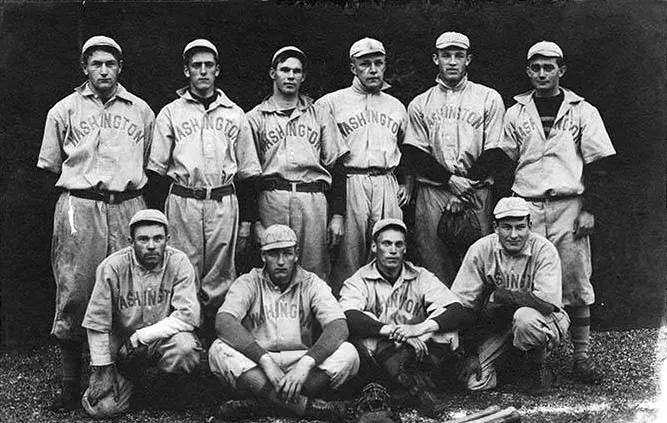
Photo: Unknown authorUnknown author, Public domain, via Wikimedia Commons
There's a moment a lot of LGBTQ+ people in professional baseball can describe with almost eerie precision. It's the moment they realized they weren't alone — not in some abstract, inspirational-poster sense, but literally, specifically, concretely not alone. Someone who'd been through it pulled them aside. Sent a text. Slid into a DM. Said, hey, I see you, and I've got some things that might help.
That moment doesn't happen by accident. And increasingly, it's happening a lot more often than most people outside baseball realize.
Across MLB organizations — in front offices, coaching staffs, training rooms, and yes, bullpens — informal mentorship networks among LGBTQ+ players, coaches, and staff have been quietly expanding for the better part of a decade. These aren't official programs with lanyards and PowerPoints. They're text chains and coffee meetings and post-game conversations that stretch way past midnight. They're the stuff that doesn't show up in a team's diversity and inclusion report but absolutely shows up in whether a young LGBTQ+ player decides to stay in the game or walk away from it.
Why Formal Programs Can Only Go So Far
Let's be honest about something: most MLB teams now have some version of an inclusion initiative. Pride nights are practically standard. HR departments have updated their policies. A handful of organizations have brought in outside consultants to run sensitivity training. That's all genuinely good. Nobody's dismissing it.
But there's a ceiling to what a formal program can deliver, and most LGBTQ+ folks in baseball will tell you exactly where that ceiling is. It's the gap between the organization supports inclusion and I know what to do when a veteran teammate makes a comment that cuts right through me and I don't know if saying something will tank my career. Policy doesn't bridge that gap. A person does.
"The handbook tells you what the rules are," said one minor league pitching coach — who asked to be identified only by his first name, Marcus — who has been quietly mentoring younger LGBTQ+ staff members for several years. "What it can't tell you is how to read the room. How to figure out which guys are actually going to have your back versus which ones are just going to say the right thing when someone's watching. That's institutional knowledge. And the only way you get it is from someone who's already figured it out the hard way."
Marcus came out to a small circle of colleagues about five years into his coaching career. He describes the early years as "a lot of performance" — not of his job, which he was good at, but of a version of himself that was exhausting to maintain. Finding a mentor, a former player who was openly gay and had navigated a post-playing career in baseball operations, changed the trajectory of his professional life in ways he still finds hard to fully articulate.
"He didn't tell me what to do," Marcus said. "He just told me what he'd done and what he'd wished he'd done differently. That was worth more than anything."
The Shape of the Network
Ask people inside these mentorship circles to describe how they work, and you'll get a dozen different answers — because there's no single model. Some connections are one-on-one, close and ongoing, resembling traditional mentorship in structure if not in subject matter. Others are more like loose constellations: a group chat, a shared spreadsheet of contacts, an annual dinner during the winter meetings where people who otherwise never cross paths get a few hours together.
Geography matters, too. Players and staff in cities with established LGBTQ+ communities — New York, Chicago, Los Angeles, San Francisco — often have access to broader support ecosystems outside baseball. But someone playing Double-A ball in a smaller market, or working as a trainer for a team in a more conservative region, might have a very different experience. For those people, a mentor who understands the specific cultural dynamics of professional baseball isn't just helpful. They can be a lifeline.
"Baseball is its own world," said Dani, a team operations staffer in her third year with an NL organization. "The hours, the travel, the locker room culture, the way information moves — it's not like any other workplace. So when I was trying to figure out how to be out at work without it becoming this whole thing, I needed advice from someone who understood that world. Not just someone who understood being queer."
Dani connected with her mentor through a mutual friend — a former player who'd been quietly building what she describes as a "very informal but very intentional" directory of LGBTQ+ people willing to talk to others coming up in the game. The connection happened over Instagram. Their first conversation lasted three hours.
What Gets Passed Down
So what actually gets transmitted in these relationships? The practical stuff is part of it — how to navigate disclosure conversations, how to handle social situations on road trips, how to assess whether a new organization is going to be a safe place before you commit to taking a job there. These are real, tactical questions that LGBTQ+ people in baseball face constantly, and having someone who's already worked through them is genuinely useful.
But the emotional dimension might matter even more. Professional baseball is a high-pressure, high-scrutiny environment where vulnerability is not exactly celebrated. The ability to talk honestly — about fear, about loneliness, about the very specific exhaustion of code-switching across a 162-game season — with someone who gets it without needing it explained is something that's hard to put a value on.
"Some days I'd just text him and say 'rough day' and he'd know exactly what kind of rough day I meant," said one player, currently in the minors, who connected with his mentor through a player advocacy organization. "He didn't need context. That sounds like a small thing but it's not. When you're used to nobody understanding, having one person who just gets it without you having to explain everything — that changes how you feel about the whole situation."
Mentors in these networks are also quick to acknowledge what they receive in return. The relationships aren't transactional in the traditional sense — they flow both directions. Younger players and staff bring fresh perspective on how the culture is shifting, what's changing, what still needs to change. Mentors who've been in the game for decades say staying connected to that energy keeps them from getting cynical.
What the Game Still Needs
None of the people we spoke with think informal networks are a permanent substitute for something more structural. The consensus is pretty clear: these connections are filling a gap that shouldn't be quite so large, and the fact that they're necessary in the form they currently take reflects real work that MLB and its teams still have to do.
More visible LGBTQ+ leadership at the organizational level. Clearer pathways for reporting hostile behavior without career risk. Intentional mentorship programming that doesn't put the entire burden of community-building on the community itself. These aren't radical asks. They're the logical next step.
But in the meantime, the network keeps growing. New names get added to the group chats. New connections get made at spring training. Someone who was a mentee three years ago becomes a mentor to someone just figuring things out.
In a sport that runs on tradition — on wisdom passed from one generation to the next, from veteran to rookie, from coach to player — there's something deeply fitting about the fact that LGBTQ+ people in baseball are building their own version of that lineage. Quietly, deliberately, and with a lot of care for the people coming up behind them.
The game teaches you to trust your teammates. Turns out that lesson applies pretty broadly.