Signed, Sealed, But Not Out: The Hidden Cost of Being LGBTQ+ in College Baseball Recruiting
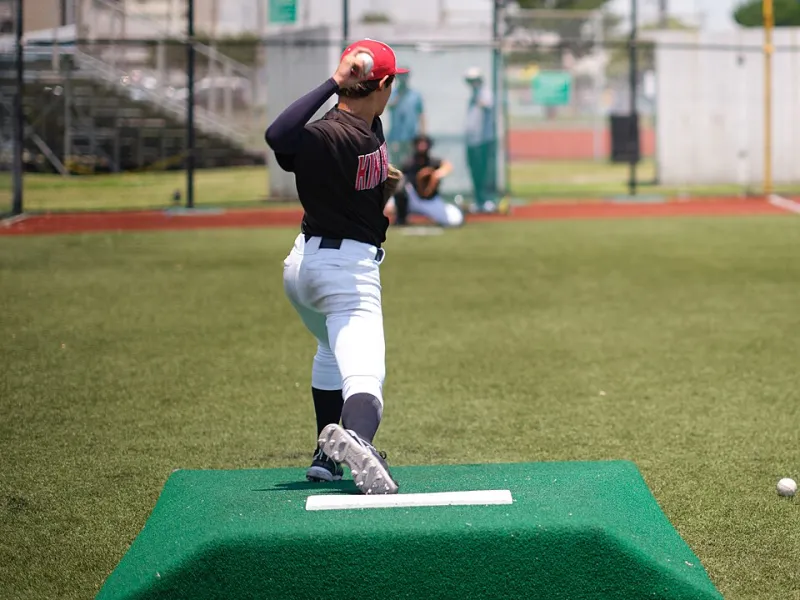
Photo: Mhuy222, CC BY-SA 4.0, via Wikimedia Commons
Every spring, thousands of high school baseball players go through the same ritual: unofficial visits, coaches' calls, scholarship offers, and the slow, anxious process of figuring out where they belong. For most recruits, the calculus is pretty familiar — program prestige, coaching staff, academic reputation, proximity to home.
But for LGBTQ+ student-athletes, there's a whole other layer to that math. One that never shows up on the official visit itinerary.
The Question Nobody Asks Out Loud
Imagine sitting across from a Division I head coach in his office, pennants on the wall, championship photos everywhere. He's selling you on the program, the facilities, the path to the pros. And somewhere in the back of your mind, you're running a completely different calculation: Is it safe to be myself here? Will my teammates accept me? What happens if I come out?
For a lot of LGBTQ+ prospects, those questions don't have obvious answers — and the recruiting process gives them almost no tools to find out.
"You can't exactly ask a coach during a campus visit whether his locker room is queer-friendly," says one college pitcher who came out to teammates during his sophomore year. "There's no section of the recruiting questionnaire for that. You're kind of flying blind."
That silence has real consequences. It means LGBTQ+ recruits are making life-altering decisions — where to spend four years, whether to accept a scholarship, which program to commit to — without access to information that's genuinely critical to their well-being.
The Closet Tax on Recruiting
Researchers and advocates who work at the intersection of athletics and LGBTQ+ inclusion have a term for what happens when queer athletes spend energy managing their identity instead of focusing on performance: the closet tax. And during recruiting, that tax is steep.
While other prospects are spending their mental bandwidth on mechanics and academics, many LGBTQ+ recruits are simultaneously trying to read the cultural temperature of every program they visit. They're scanning social media for signals. They're Googling coaches' public statements. They're asking around through whatever network they can access — which, for a closeted 17-year-old in a small town, might not be much.
Some don't make it through that process intact. Coaches, counselors, and out college athletes who spoke with Out in Center Field described a consistent pattern: LGBTQ+ prospects who felt they couldn't be authentic during recruiting often disengaged from the process entirely, scaled back their ambitions, or quietly steered themselves toward programs they perceived as safer — even if those programs came with smaller scholarships or less competitive rosters.
That's the brain drain nobody's talking about.
When Smaller Programs Win the Culture Game
Here's something that might surprise you: a number of talented LGBTQ+ baseball players are choosing smaller Division II or NAIA programs over Power Five schools. Not because they couldn't get offers from bigger programs, but because those smaller schools gave them something the big names couldn't — a genuine sense of belonging.
It's not always obvious from the outside. These programs might not have the fancy facilities or the national TV exposure. But they have coaches who've done the work. They have teammates who've been through inclusion training. They have campus LGBTQ+ resource centers that actually show up for athletes. And sometimes, they have out players already on the roster — which is, for a lot of recruits, the most powerful signal of all.
"I had an offer from a program that was way more prestigious on paper," says one outfielder now playing at a mid-major program in the Midwest. "But when I visited the smaller school, there was an out player on the team who just casually mentioned it during the campus tour. That was it. That's where I knew I could play my best baseball."
For recruiting directors at those smaller programs, inclusive culture has quietly become a competitive advantage — one they've started to lean into.
What Institutions Are (and Aren't) Doing
The NCAA has made some moves in recent years around LGBTQ+ inclusion — publishing resources, updating non-discrimination language, issuing guidance around transgender athlete participation. But when it comes to the recruiting process specifically, there's still a significant gap between policy language and lived reality.
Few programs have explicit outreach strategies for LGBTQ+ recruits. Fewer still have made visible commitments that would signal to a closeted high schooler that they'd be welcomed. And while some athletic departments have hired inclusion coordinators or DEI staff, those roles often don't have direct lines into baseball operations.
The result is a system where inclusion is largely informal — dependent on the values of individual coaches, the culture of specific locker rooms, and whether a given recruit happens to know the right people to ask the right questions.
That's not a system. That's luck.
The Scholarship Gap
There's also a financial dimension that doesn't get enough attention. Baseball scholarships, unlike football and basketball, are equivalency scholarships — meaning they can be divided among multiple players rather than awarded as full rides. That gives coaches significant discretion in how they allocate aid, and it creates a dynamic where a recruit's perceived "fit" with a program can quietly influence scholarship offers.
For LGBTQ+ players who are closeted during recruiting, that fit calculation is already happening on incomplete information. And if they're steering themselves toward smaller programs, they may also be accepting less financial support — paying a real economic price for choosing a safer environment.
Nobody tracks this data right now. That's part of the problem.
What Better Looks Like
Some programs are starting to figure it out. Coaches who've made explicit public commitments to LGBTQ+ inclusion — through Pride Night participation, public statements, or visible support for out players — report that it changes the recruiting dynamic. Prospects reach out specifically because they saw a coach post something supportive. Parents of LGBTQ+ athletes ask about team culture directly because they feel like they can.
Visibility, it turns out, is a recruiting tool.
Beyond individual programs, advocates are pushing for structural changes: standardized inclusion questions in official visit frameworks, LGBTQ+-specific athlete mentorship programs that connect recruits with out college players, and transparency requirements around campus climate data.
None of that is complicated. It just requires the sport to take seriously what it keeps saying it values.
The Talent Is Out There
Here's the thing about baseball's future talent pipeline: the players are there. The LGBTQ+ kids who love this game, who've put in the work, who have the arm strength and the bat speed and the baseball IQ to compete at the highest levels — they exist. They're in every state, every travel ball circuit, every high school program in the country.
The question is whether the sport is building a recruiting infrastructure that actually reaches them. Or whether it's going to keep losing that talent to programs — and sometimes to other sports entirely — that figured out inclusion before baseball did.
The diamond belongs to everyone willing to put in the work. The recruiting process should say the same thing.