Choosing Your Team: How LGBTQ+ Players Are Factoring Culture Into Free Agency Decisions
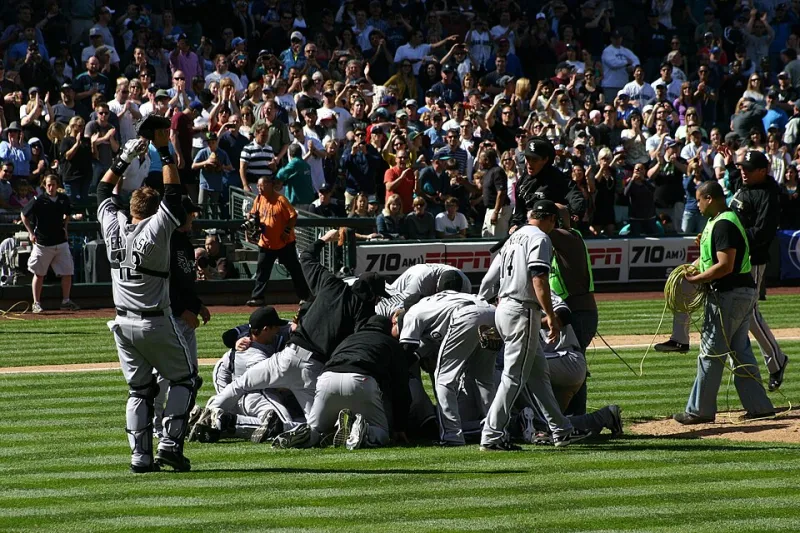
Photo: baseballmapper, CC0, via Wikimedia Commons
Every November, when the hot stove season kicks into gear and the transaction wire starts lighting up, the calculus of free agency plays out in ways that fans can see — the years, the dollars, the no-trade clauses — and in ways they can't. The conversations that happen in agents' offices and on private calls between players and team officials cover terrain that never makes it into a press release.
For a growing number of LGBTQ+ athletes navigating professional baseball's open market, one of those private conversations is increasingly about something that would have seemed almost surreal to discuss a decade ago: whether a particular franchise is actually a safe and affirming place to be out.
It's not the only factor. It's never the only factor. But it's on the table in a way it simply wasn't before — and that shift is starting to have real consequences for how organizations position themselves in a competitive talent market.
The New Math of Fit
Baseball agents have always helped clients think through the intangibles of a potential destination. Playing time, roster construction, a manager's communication style, a city's cost of living relative to the contract offer — these are standard free agency conversations. What's changed is that questions about organizational culture around LGBTQ+ inclusion have started entering that same framework.
One agent, who represents several players in the affiliated system and asked not to be named, described the shift matter-of-factly: "It used to be a question nobody asked out loud. Now I have clients who specifically want to know about a team's actual clubhouse culture, not just whether they did a Pride Night. Those are two very different things, and my clients know the difference."
That distinction — between performative inclusion and the real thing — comes up constantly when LGBTQ+ players talk about evaluating potential teams. A rainbow logo on a team's social media feed in June doesn't tell a player much about whether the manager is going to have his back, or whether the city's LGBTQ+ community is visible and vibrant enough to feel like home.
Destination Cities and the Geography of Belonging
Professional baseball maps onto American geography in ways that make the question of city culture genuinely significant for players making long-term decisions. A seven-year contract is a long time to live somewhere. And for an openly gay or transgender athlete, the difference between landing in a city with a thriving LGBTQ+ community and a long history of progressive politics versus one where that infrastructure is thinner can matter enormously to quality of life.
Markets like Chicago, New York, Los Angeles, and the Bay Area carry obvious cultural associations — they have established LGBTQ+ neighborhoods, visible community organizations, and fan bases that have generally been receptive to inclusion narratives. Players and their families notice. Agents factor it in.
But the story isn't purely coastal. Several mid-market cities have made genuine strides in building LGBTQ+-affirming community infrastructure, and some of their teams have been proactive about signaling that they want to be known as welcoming organizations. The franchises that have made that investment — not just in June, but year-round, through community partnerships and consistent organizational messaging — are starting to develop reputations that travel through player networks.
"Players talk," said one former minor leaguer who's been open about his sexuality. "Word gets around about which clubhouses are actually fine and which ones are going to be a problem. That's been true forever. What's different now is that more guys feel like they can act on that information."
The Front Office Angle: Inclusion as Competitive Advantage
Here's the part that tends to get the attention of team executives who might be indifferent to the moral case for inclusion: if LGBTQ+ players — and the progressive allies in the player pool who care about organizational culture — are actively factoring team environment into their decision-making, then franchises that lag on genuine inclusion are potentially taking themselves out of the running for certain players.
That's a competitive argument, and it's one that resonates in front offices in ways that purely ethical arguments sometimes don't. Talent acquisition is zero-sum. If an organization has developed a reputation — warranted or not — as an unwelcoming environment, that reputation costs them at the margins of the talent market. And in a sport where margins are everything, that's not nothing.
Several front office executives have started talking about organizational culture as part of their recruitment pitch in ways that feel meaningfully different from the standard boilerplate. When a team president tells a prospective player that inclusion isn't a PR initiative but an operational value, and when that claim is backed up by the actual experience of players already in the system, it lands differently.
What This Means for the Competitive Landscape
The ripple effects of this emerging dynamic are subtle but real. If certain franchises become known as genuinely desirable destinations for LGBTQ+ players — and for the straight allies who increasingly care about playing alongside organizations that share their values — those teams gain a soft recruiting advantage that compounds over time.
It's not going to show up in WAR projections. You won't find it in the PECOTA spreadsheets. But in a sport that has always understood the value of culture in ways that are hard to quantify — the teams that win consistently tend to have something intangible working in their favor — the organizations building genuinely inclusive environments may be planting seeds that pay off in ways the analytics don't fully capture.
For LGBTQ+ fans watching this play out from the stands and the couch, there's something quietly exciting about it. The idea that an openly gay player might choose a team partly because of how the city's community feels, or because of what the clubhouse culture is actually like — and that teams are starting to compete on those terms — feels like a different kind of progress than a Pride Night graphic. It's inclusion working its way into the bones of how the game actually operates.
And that, more than any logo or ceremonial first pitch, is what a genuine shift looks like.