The People Who Actually Run the Ballpark: Meet the LGBTQ+ Ops Leaders Making Stadiums Work for Everyone
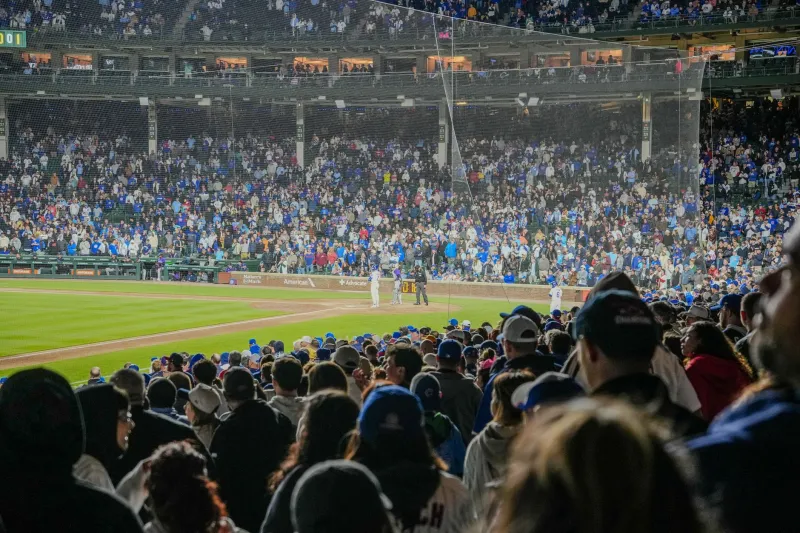
Most fans, when they think about who shapes their experience at a ballpark, picture the players on the field or maybe the executives in the suites. They don't think about the person who decided where the gender-neutral restrooms go, or who developed the training protocol that determines how a security guard responds when a same-sex couple gets harassed in Section 112. They don't think about the facilities director who fought for a quiet room near the family section, or the guest services manager who rewrote the incident reporting system to actually capture anti-LGBTQ+ complaints.
Those decisions are made by real people with real jobs, and a growing number of them are LGBTQ+. They work in stadium operations, facilities management, guest services, and event logistics — the functional backbone of every major and minor league ballpark in the country. And they are, often without much institutional support or public recognition, quietly making the places we love to watch baseball meaningfully better.
Infrastructure Is Never Neutral
Here's something that anyone who has worked in facilities management will tell you: every design choice in a public space is a values statement. The location of a restroom, the layout of a security checkpoint, the placement of a first aid station — these aren't neutral logistical decisions. They reflect assumptions about who the space is for and what their needs are.
For decades, baseball stadiums were designed with a very specific fan in mind. The infrastructure reflected that. Single-sex restrooms everywhere, family areas that assumed a particular family structure, security protocols that were rarely designed with LGBTQ+ harassment scenarios in mind. The experience of attending a game as an openly queer person, a trans fan, or an LGBTQ+ family was often fine — until it wasn't, and then there was frequently no clear path to making it right.
LGBTQ+ operations professionals working inside these institutions are changing that calculus, one policy and one renovation at a time.
"The bathroom conversation sounds small until you've had to explain to a trans teenager why they can't safely use either option at a stadium," said one facilities director at a Triple-A affiliate in the South, who is nonbinary and has worked in stadium operations for eleven years. "Then it stops being small very fast."
Over the past three seasons, this director has overseen the conversion of two single-occupancy restrooms near the main concourse into clearly marked, gender-neutral facilities — a change that required navigating both physical renovation logistics and a fair amount of internal skepticism. "The pushback was always framed as practical. 'There's no demand for it.' 'It's too expensive.' But once they were there, people used them. Families with young kids, older fans who needed privacy, trans fans. The demand was always there. We just weren't building for it."
Training the People Who Set the Tone
Physical infrastructure is only part of the equation. How staff behave — particularly security personnel and guest services teams — determines whether an inclusive facility actually functions as one.
This is an area where LGBTQ+ professionals in stadium operations have quietly driven some of the most impactful changes, often working through HR partnerships or guest experience departments to redesign training programs that had previously treated LGBTQ+ harassment as an edge case.
A guest services manager at an MLB stadium in a major Midwestern market, who is a gay man and has been in the role for six years, described the gap he encountered when he first started. "We had a general anti-harassment policy, but the training didn't really address what anti-LGBTQ+ incidents actually look like in a crowd. Staff weren't sure what counted, they weren't sure how to document it, and they definitely weren't sure how to de-escalate it in a way that didn't make the victim feel like the problem."
He spent two off-seasons working with his organization's HR team and an outside consultant to develop a training module specifically addressing LGBTQ+ fan safety — one that included real scenarios, de-escalation language, and a clear documentation pathway. The result wasn't a dramatic policy overhaul. It was a practical tool that gave frontline staff the vocabulary and confidence to actually respond.
"The thing I hear most from LGBTQ+ fans who've had bad experiences isn't that staff were hostile," he said. "It's that staff didn't know what to do. They froze. That's a training problem, and training problems are solvable."
Navigating Institutional Resistance Without Burning Out
None of this work happens in a vacuum, and it would be dishonest to describe it as easy. LGBTQ+ professionals in stadium operations frequently describe navigating institutional cultures that are resistant to change — not always because of explicit hostility, but because of inertia, budget constraints, and a persistent tendency to treat inclusivity as a PR initiative rather than an operational priority.
"There's a version of this where you get trotted out for Pride Night and that's your moment," said the facilities director in the South. "And then the other 80 home games, the infrastructure is what it always was. That's not inclusion. That's a photo opportunity."
The professionals making the most durable changes tend to be the ones who've learned to frame inclusion as operational efficiency — which, practically speaking, it often is. Gender-neutral restrooms reduce long lines. Clear harassment protocols reduce liability. Sensory-friendly spaces open the stadium to fans with disabilities who bring their families and spend money. Inclusive infrastructure isn't charity. It's good business.
That framing doesn't always work, and it comes with its own compromises. But it's a language that institutional stakeholders often respond to when other arguments stall.
Why This Work Matters Beyond Pride Month
The changes being made by LGBTQ+ operations professionals in baseball stadiums aren't visible in the way that a player coming out is visible, or a team releasing a Pride Night announcement is visible. They don't generate headlines. They generate better fan experiences, quietly and consistently, for people who might never know why the restroom situation at their local ballpark got better or why the security staff at that stadium handled a difficult situation with unusual competence.
But visibility isn't the point. The point is that a queer teenager attending her first game shouldn't have to do a risk assessment before she gets to enjoy the baseball. The point is that an LGBTQ+ family should be able to show up and just be there, without the low-grade vigilance that has historically come with the territory.
The people making that possible are working the operations desks and facilities offices of stadiums across the country. They deserve to be part of the story of how baseball is getting better — because they are, in the most practical and concrete sense, exactly that.