The Minors Are the Message: How LGBTQ+ Players Are Quietly Revolutionizing Baseball's Culture Before the Bigs

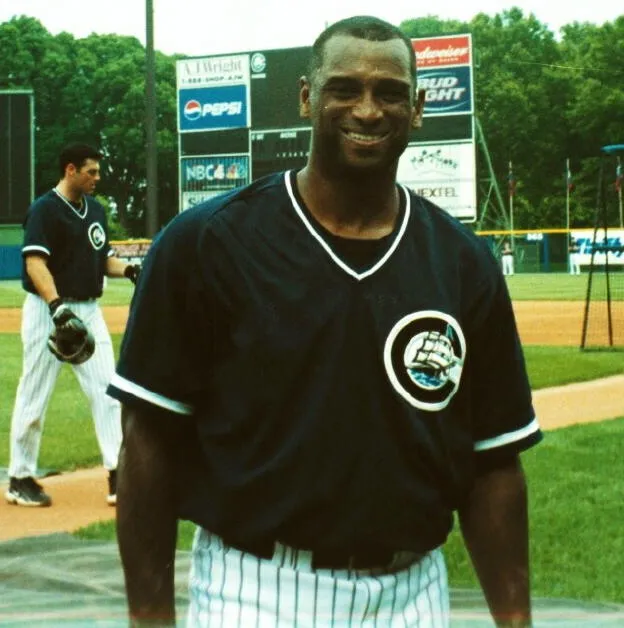
Photo: Northern-Virginia-Photographer, CC0, via Wikimedia Commons
There's a particular kind of loneliness that comes with being a minor leaguer. The pay is low, the bus rides are long, and the pressure to conform — to blend into the hyper-masculine, tradition-soaked world of professional baseball — can feel suffocating. Now imagine carrying all of that while also navigating what it means to be openly queer in one of the sport's most insular environments.
That's the reality for a growing number of LGBTQ+ athletes working their way through the minor league system. And quietly, determinedly, they're changing things.
The Invisible Testing Ground
The minor leagues don't get the spotlight that MLB does. No prime-time broadcasts, no stadium sellouts, no national think pieces about clubhouse culture. But that relative obscurity is exactly what makes what's happening there so significant. The attitudes, habits, and unspoken codes that define a player's understanding of professional baseball are almost entirely formed in the minors. If you want to know what MLB's culture will look like in five or ten years, you look at what's happening right now in Quad Cities, Kannapolis, and Fresno.
And what's happening is this: LGBTQ+ players are coming out — not in splashy press conferences, but in quiet conversations with teammates, in Instagram posts that don't make a big deal of it, in the simple act of not lying when someone asks if they have a girlfriend.
"I didn't make an announcement," said one outfielder currently playing in Double-A, who asked that we not use his name because he's still working toward the majors and navigating team dynamics carefully. "I just stopped hiding. There's a difference. My teammates figured it out, and honestly? Most of them didn't care as much as I thought they would."
That experience — the fear being bigger than the reality — is something coaches and player advocates hear repeatedly.
The Fear Is Real, But So Is the Solidarity
Let's not sugarcoat it. Minor league baseball is still a world where homophobic language gets tossed around casually, where the culture of machismo runs deep, and where the fear of being perceived as "different" can genuinely affect a player's career trajectory. Scouts evaluate character. Managers have favorites. The margins are razor-thin, and players know it.
But the landscape is shifting — partly because of intentional advocacy, and partly because Gen Z players simply grew up in a different America than their predecessors.
Organizations like the LGBTQ+ Sports Coalition and You Can Play have expanded their outreach into affiliated minor league systems, offering resources for both players and coaching staff. Some MLB parent clubs have quietly begun incorporating inclusion training into their player development programs — not as a checkbox exercise, but as genuine culture work.
"The conversation used to be, 'How do we protect LGBTQ+ players from harm?' " said one player development coordinator at an NL organization who works directly with minor leaguers. "Now it's becoming, 'How do we create an environment where they can actually thrive?' That's a meaningful shift."
Meanwhile, players themselves are building informal networks — group chats, connections through social media, even just knowing that the shortstop two levels above you is out and doing fine. Visibility, even at small scale, creates a kind of permission structure.
Small Towns, Big Moments
There's something worth noting about the geography of minor league baseball. These players aren't living in Brooklyn or West Hollywood. They're in places like Hickory, North Carolina, and Great Falls, Montana — communities that may not have robust LGBTQ+ infrastructure, where being visibly queer carries its own set of social stakes beyond the clubhouse.
For some players, that context makes openness harder. For others, it becomes an unexpected opportunity.
"I went to a Pride event in the city where my team was based, and a couple of my teammates came with me," recalled one pitcher who came out to his team during his second professional season. "Not because they're gay — they just wanted to show up for me. That meant more than I can explain. And I think it meant something to the people at that event too, seeing baseball players there."
Those moments — a few guys in team gear showing up to a Pride parade in a mid-sized Southern city — don't make headlines. But they ripple outward in ways that matter.
Coaches Are Part of This Story
The role of coaches and managers in shaping minor league culture cannot be overstated. A manager who shuts down homophobic language in the dugout — even once, even casually — sends a message that echoes for an entire season. Conversely, a coaching staff that laughs along or looks the other way sets a very different tone.
Advocates say the good news is that more coaches are choosing to engage, often because they've had a player come out to them directly and that personal relationship changed their perspective.
"You can run all the sensitivity training in the world," said one veteran minor league manager with over a decade of experience in affiliated ball. "But what actually changes people is knowing someone. Having a player you care about, a kid you've watched work his tail off, tell you who he is. That's what sticks."
This is the human infrastructure of culture change — slow, unglamorous, and more durable than any policy memo.
What the Majors Could Learn
Here's the provocative truth: in some ways, the minor leagues are ahead of MLB when it comes to the lived experience of LGBTQ+ inclusion. Not because the environment is easier — it isn't — but because the players navigating it right now are doing so without the weight of being "the first" at the highest level. They're figuring it out in real time, building playbooks that will eventually travel with them if and when they reach the show.
MLB has made visible strides — Pride Nights, partnership announcements, statements of support. But statements and parties are not the same as culture. The culture is being built in the minors, by players who are choosing authenticity over concealment at enormous personal risk, and by teammates and coaches who are choosing to meet them there.
When the next openly gay major leaguer steps into a big-league clubhouse, he won't be doing it alone. He'll be walking in on the shoulders of everyone who came out in the bus leagues, in the Low-A locker rooms, in the small towns where nobody was watching.
That's where the real game is being played. And it's already in the later innings.